How to Effectively Study Bones
Goal: Understand how each bone relates to the body as a whole.
Purpose: To encourage deeper, longer-lasting learning by linking a bone to the skeletal, muscular, and cardiovascular systems rather than relying on rote memorization.
How to use this guide: Follow the five structured steps below. They are designed to help you focus on meaningful connections rather than just memorizing facts.
Mnemonic: Learning Small Notes About Bones
Step 1 – Location
Question: Which body region contains the bone (e.g., upper arm, lower leg)?
Purpose: Identifying location helps you build a mental map of the skeleton and recall neighboring bones and muscles.
Step 2 – Shape
Question: What is the bone’s shape?
Purpose: A bone’s shape is closely linked to its function. Recognizing the shape gives insight into the bone’s role in movement and support.
Common Shapes
-
Long: Functions as a lever that enables large movements.
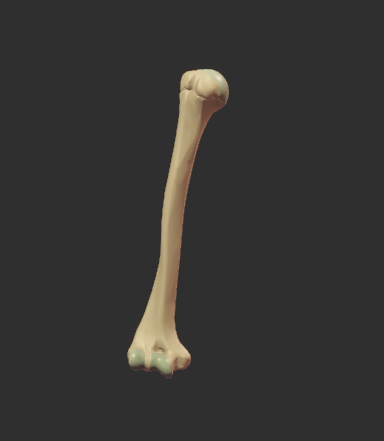
Humerus -
Short: Provides strength, stability, and limited motion.
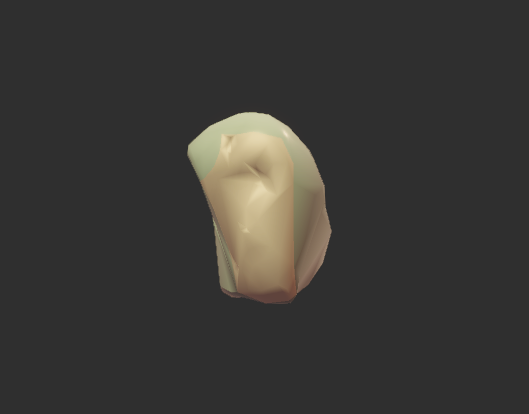
Carpal (Wrist) Bone -
Flat: Protects organs and offer muscle attachment sites.
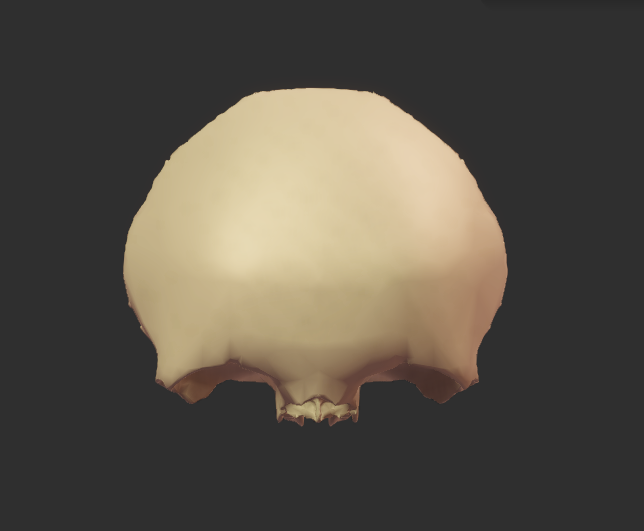
Frontal Bone -
Irregular: Complex shape with a specialized function.
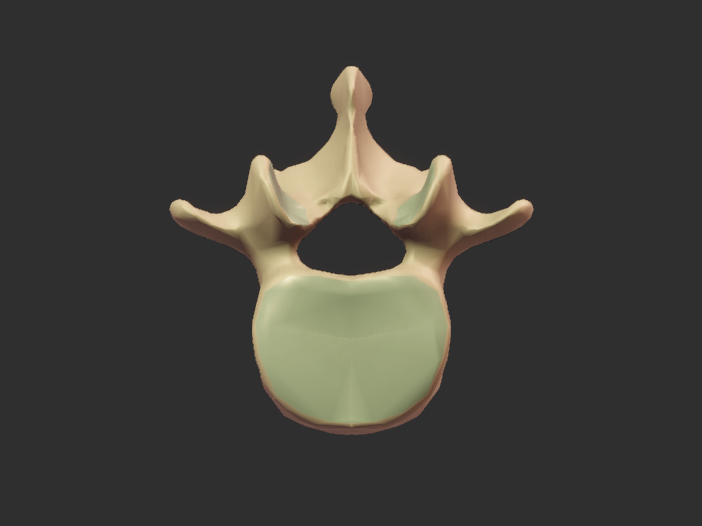
Vertebra L3
Step 3 – Neighbors
Question: Which bones articulate (form a joint) with this one, and what is the type of each joint?
Purpose: Knowing neighboring bones and joint types helps you understand how this bone contributes to movement.
Step 4 – Anatomical Landmarks
Question: What are the bone’s named landmarks, and why is each important?
Purpose: Understanding each landmark’s significance, such as what muscles, nerves, blood vessels, and other bones interact with the location, enhances both recall and functional knowledge.
Step 5 – Blood Supply
Question: Which blood vessels supply the bone?
Purpose: Studying blood supply helps you see how bones interact with the cardiovascular system, providing a bigger-picture understanding of their role in the body.
Information based on Teach Me Anatomy.
Images from Z-Anatomy.
Associated video
Interactive Exercise
First, see the five steps applied to the humerus. Then, apply them to the femur and check your work using the femur study sheet (Coming soon!).
Feedback
We’d love to hear from you! You can: